
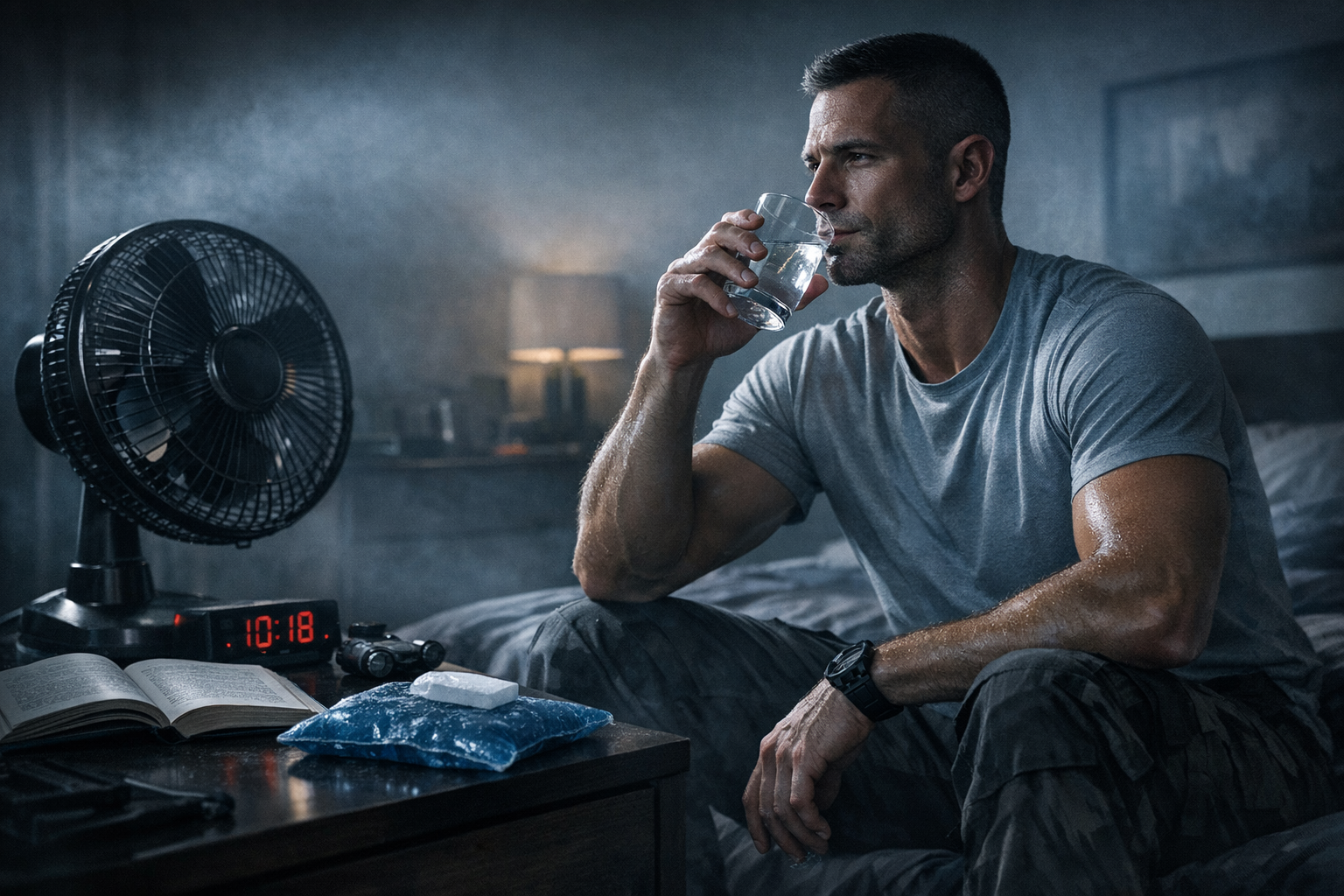
Extreme heat affects your brain, not just your body. It can lead to irritability, anxiety, poor sleep, and even long-term mental health issues. Here's how to protect your mental well-being when temperatures rise:
- Stay Hydrated: Drink water consistently, even before you feel thirsty. Add electrolytes if you're sweating heavily.
- Practice Mindfulness: Use techniques like 4-7-8 breathing or progressive muscle relaxation to manage stress from heat.
- Improve Sleep: Keep your bedroom cool (60-67°F), block sunlight, and use breathable bedding for better rest.
- Cool Your Body: Take cool showers, use fans (below 95°F), and wear loose, light-colored clothing.
- Plan Your Day: Avoid outdoor activities during peak heat (11 a.m. to 3 p.m.); opt for cooler morning or evening hours.
- Stay Connected: Check on vulnerable neighbors and use community cooling centers if needed.
- Prepare for Outages: Use tools like DIY water generators and portable power systems to maintain hydration and cooling during blackouts.
Heatwaves can strain your mental health, but these steps help you stay clear-headed and resilient.
@figure 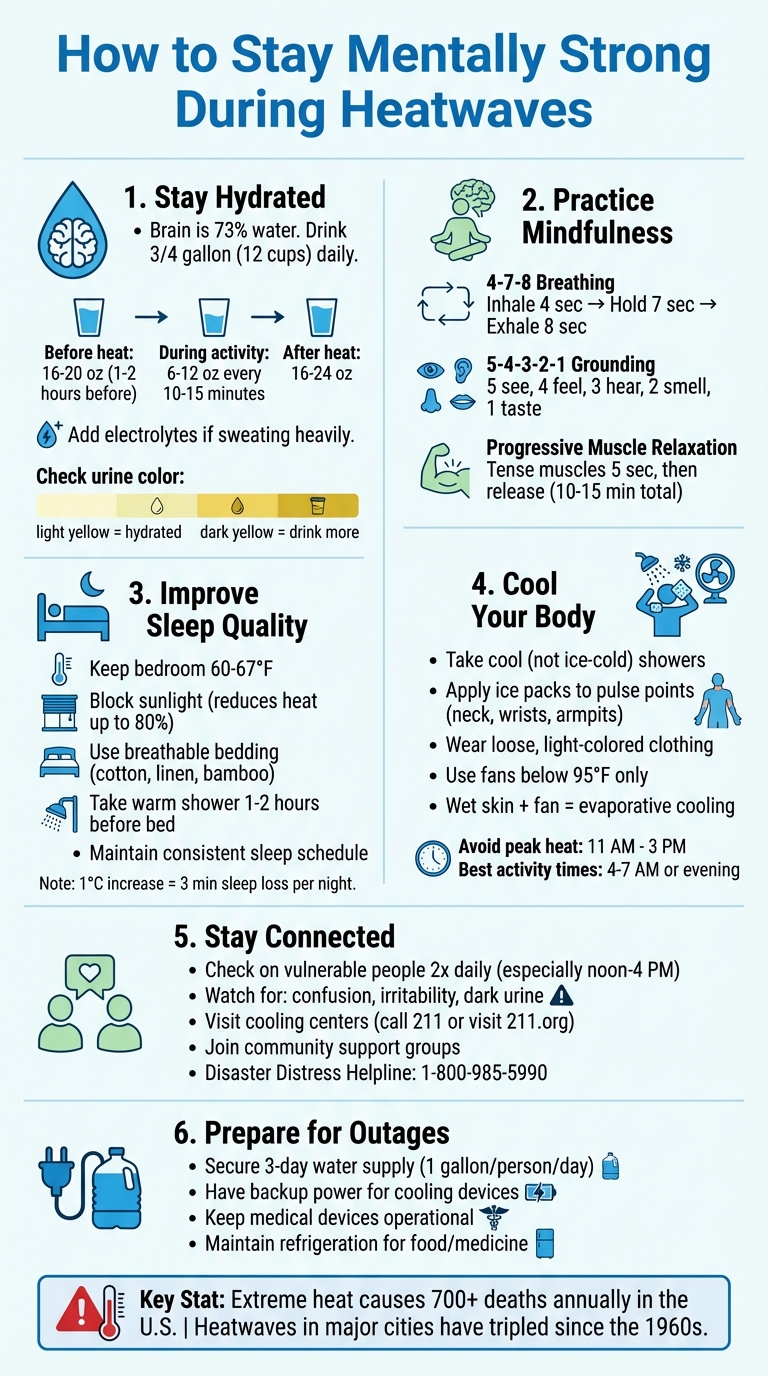 {6 Steps to Maintain Mental Strength During Heatwaves}
Heat can harm your mental health, here's how to stay cool and healthy
Step 1: Stay Hydrated to Maintain Mental Clarity
Did you know your brain is about 73% water? When you don’t drink enough, it disrupts the production of hormones and neurotransmitters, leading to confusion, irritability, and brain fog. Even mild dehydration can take a toll on your brain’s performance.
How Dehydration Impacts Brain Function
When your body lacks water, it shifts focus from cognitive tasks to regulating body temperature. This shift can make it harder to concentrate, trigger mood swings, and even lead to impulsive behavior - clear signs your brain isn’t getting the hydration it needs.
Here’s a key fact: by the time you feel thirsty, you’re already dehydrated. As the Cleveland Clinic explains, “If you feel thirsty, you're already dehydrated”. The good news? Drinking water can reverse mild dehydration symptoms in as little as 5 to 10 minutes.
A quick way to check your hydration is to monitor your urine color. Light yellow or clear urine means you’re well-hydrated, while dark yellow suggests it’s time to drink more fluids.
How Much Water and Electrolytes Do You Need?
To keep your brain sharp, aim to meet daily hydration needs, especially in hot weather. A general guideline is about 3/4 gallon (12 cups) of water per day. Break it down like this: drink 16–20 oz 1–2 hours before heading into the heat, 6–12 oz every 10–15 minutes while active, and 16–24 oz when you’re back indoors.
If you’re sweating heavily and losing sodium and potassium, plain water might not be enough. Adding electrolyte solutions or sports drinks can help replenish what’s lost. Dr. Raleigh Todman from Columbia University Medical Center suggests these drinks - or even milk - for faster recovery. Pairing fluids with salty snacks can also help restore essential minerals.
Be careful with alcohol, caffeine, and sugary drinks, as they can actually dehydrate you further. Stick with water as your go-to, add electrolyte drinks when needed, and avoid drinking more than 6 cups per hour to keep your hydration efforts on track.
Step 2: Use Mindfulness Techniques to Reduce Stress
Once you've tackled hydration, mindfulness can help stabilize your mental state when dealing with heat stress. High temperatures can strain your brain, leading to irritability, mood swings, and feelings of overwhelm. On top of that, the discomfort from excessive sweating and humidity might spark anxiety or even fear in some people. Mindfulness practices offer a way to stay grounded and focused during these challenging moments.
Quick Breathing and Meditation Exercises
Short breathing exercises are a simple way to calm your nervous system when heat stress starts to take over. One popular method is the 4-7-8 breathing technique: inhale for 4 seconds, hold your breath for 7 seconds, and exhale slowly over 8 seconds. Repeating this cycle can help release tension and bring a sense of calm.
Another helpful tool is the 5-4-3-2-1 grounding exercise. Here's how it works: identify 5 things you can see, 4 sensations you can feel, 3 sounds you can hear, 2 smells you can detect, and 1 taste you can notice. This practice helps redirect your mind from physical discomfort and racing thoughts. For an added calming effect, splash cold water on your wrists or face.
Progressive Muscle Relaxation for Physical Tension
Progressive muscle relaxation (PMR) is a great way to ease the physical tension that often builds during extreme heat. According to the U.S. Department of Veterans Affairs, PMR is "a two-step relaxation practice to reduce stress and build awareness of sensations of tension and deep relaxation in various muscle groups".
To try PMR, start by tensing a specific muscle group for about five seconds as you inhale, then release the tension quickly as you exhale. For example, clench your fists tightly for five seconds, then let go completely. Move on to other muscle groups - like your biceps, forehead, jaw, shoulders, stomach, calves, and shins - focusing on the contrast between the tension and the relaxation. To deepen the effect, you can say the word "RELAX" as you release each muscle group. This simple, equipment-free practice takes about 10–15 minutes and is a practical way to manage heat-induced stress.
With mindfulness helping to reduce the strain of heat stress, the next step is to focus on improving your sleep quality in high temperatures.
Step 3: Improve Sleep Quality in High Temperatures
Heatwaves don’t just make you sweat - they can seriously mess with your sleep. Even a small temperature increase, like 1°C, can shave off about 3 minutes of sleep per night. When temperatures climb above 86°F, you could lose nearly 14 minutes of sleep nightly. Over a year, that adds up to around 44 hours of lost rest. Without proper sleep, your ability to handle heat and stress takes a hit.
How to Cool Your Bedroom for Better Sleep
For restful sleep, aim to keep your bedroom between 60°F and 67°F - this is the sweet spot for most people. A cooler room helps your body naturally lower its temperature, which is key for falling into deeper, restorative sleep.
Here are some tips to keep your bedroom cool:
- Block sunlight: Keep curtains and blinds closed during the day to block up to 40% of heat. Insulated cellular shades can be even more effective, reducing heat by up to 80%.
- Choose breathable bedding: Switch to materials like cotton, linen, or bamboo to stay cooler at night.
- Try evaporative cooling: Sleep under a damp sheet to take advantage of the cooling effect as the water evaporates.
- Use fans strategically: Position a fan in a window to push out hot air or set up two fans to create a cross-breeze.
- Cool your body: Apply ice packs to pulse points like your neck, wrists, or forehead for quick relief.
- Take a warm shower: A warm shower 1–2 hours before bed triggers your body’s natural cooling mechanisms as it works to lower your core temperature afterward.
Once your room feels cool and comfortable, the next step is to stick to a steady sleep routine.
Keep a Regular Sleep Schedule
Consistency is key when it comes to sleep - especially during heatwaves. Going to bed and waking up at the same times every day (yes, even on weekends) helps your body adapt better to heat stress. Your circadian rhythm, which manages your internal clock and body temperature, thrives on routine. A consistent schedule ensures your brain prioritizes deep sleep and REM cycles, which are both highly sensitive to temperature changes. As Rebecca Robbins, an Instructor of Medicine at Harvard Medical School, explains:
During certain stages of sleep, our body is not able to regulate temperature, so if we're exposed to extremes in temperatures, we are more likely to wake up.
To strengthen your sleep routine, try the following:
- Adjust your bedtime gradually in 15-minute increments if needed.
- Get morning sunlight to reinforce your circadian rhythm.
- Keep naps short - under 30 minutes - and avoid napping after 3:00 PM to build proper sleep pressure.
sbb-itb-1666494
Step 4: Cool Your Body to Reduce Mental Strain
Once you've tackled the basics of managing heat-induced stress, the next step is keeping your body cool. Why? Because overheating doesn’t just make you uncomfortable - it forces your body to work harder to regulate its temperature. This process, called thermoregulation, can sap the energy you need for clear thinking and emotional balance. As Kim Meidenbauer, Ph.D., Assistant Professor of Psychology at Washington State University, explains:
"When we are experiencing hot weather, our bodies must devote valuable energy to cooling themselves down, a process called thermoregulation. This disrupts our brain's typical functioning, making it harder to carry on with our daily activities and tasks that require a clear head."
The upside? Simple cooling techniques can help you stay sharp and focused, even when the heat is on.
Easy Cooling Techniques to Stay Sharp
Cool showers or baths are a quick way to bring down your core temperature. Use cool or tepid water instead of ice-cold water, as freezing water can cause blood vessels to constrict, trapping heat inside your body. For more targeted relief, try applying ice packs or cold wet cloths to pulse points like your neck, armpits, or groin.
Evaporative cooling is a lifesaver if you don’t have air conditioning. Simply wet your skin with a spray bottle or damp cloth and stand in front of a fan. This method works by encouraging heat to escape through evaporation. Dr. Tess Wiskel, an Emergency Physician, offers this advice:
"In that case [hot air], wet your skin, even with a spray bottle or a wet wipe. The fan will promote evaporative heat loss."
You can also wear a damp cotton T-shirt or drape a wet towel over your body - just make sure to re-wet it as needed.
Clothing choices play a big role in staying cool. Opt for loose, lightweight, and light-colored clothes that allow air to circulate. While cotton is a common choice, synthetic fabrics like nylon may wick moisture away from your skin more efficiently. Also, don’t skip sunscreen - sunburn makes it harder for your body to release heat.
One critical note: electric fans are only effective when the temperature stays below 95°F (35°C). Beyond that, fans can blow hot air around and actually increase dehydration. If indoor temperatures climb above 95°F, seek out an air-conditioned spot or a cooling center.
While these cooling strategies help ease physical stress, pairing them with smart scheduling can also protect your mental energy.
Plan Your Day Around Cooler Hours
Cooling your body is only half the battle; timing your activities wisely can make a huge difference, too. During a heatwave, the hottest hours - typically between 11:00 a.m. and 3:00 p.m. - put the most strain on your body and mind. To conserve energy, save physically or mentally demanding tasks for cooler parts of the day, like early morning (between 4:00 a.m. and 7:00 a.m.) or late evening.
Dr. Arianne Teherani, Professor of Medicine at UCSF, emphasizes this point:
"If you have to be physically active, do it early in the morning or in the evening when temperatures are cooler."
If you must be active during peak heat, slow down and take frequent breaks in shaded or air-conditioned areas. Heat can make even simple tasks feel overwhelming, so pacing yourself is key to maintaining focus.
Finally, use the evening hours to ventilate your home by opening windows when temperatures drop. Then, close them during the day to lock in the cool air. This small step can keep your living space comfortable and reduce added stress.
Step 5: Stay Connected with Others
After addressing the physical challenges of extreme heat, it’s equally important to focus on staying socially connected. Heatwaves can sometimes leave people feeling isolated, but maintaining strong social ties is a vital way to protect your mental well-being. Reaching out to family, neighbors, and community groups not only helps reduce stress but can also provide an early warning if someone around you is struggling.
Check on At-Risk Family and Neighbors
Certain groups are more vulnerable to heat-related illnesses and need extra care during extreme temperatures. Older adults - especially those over 65 - are at higher risk because their bodies don’t regulate temperature as effectively. Others who may need support include those living alone, people with chronic heart or lung conditions, and individuals taking multiple medications.
Make it a habit to check on vulnerable neighbors or family members at least twice daily, particularly during the hottest part of the day, from noon to 4:00 p.m.. Ensure they’re staying hydrated by asking if they’re drinking enough water and watching for signs like dark yellow urine. For children and older adults, pay attention to their alertness and how often they’re urinating. Symptoms like confusion, irritability, or slurred speech could indicate a heat-related illness that needs immediate medical attention. Dr. Raleigh Todman, an Emergency Medicine Physician at Columbia University Medical Center, emphasizes:
"This sort of neighborly mindfulness is something, if possible, to keep in mind."
If someone doesn’t have air conditioning, help them find a public cooling center or offer to assist with transportation. Setting up a communication plan with emergency contacts can also ensure everyone has someone looking out for them. These small but meaningful actions not only keep people safe but also strengthen the bonds within your community.
Visit Cooling Centers and Join Community Groups
For those without air conditioning at home, cooling centers are more than just a place to escape the heat - they’re also a chance to connect with others who are navigating the same challenges. You can find a nearby cooling center by calling 211 or visiting www.211.org (or dialing 311 in larger cities).
These spaces can help relieve the mental strain that often accompanies extreme heat. Just as practices like mindfulness and good sleep habits support your mental health, connecting with others in a shared environment can combat feelings of isolation. Many communities also offer programs like “Be a Buddy,” which provide additional support during heatwaves. If you’re feeling overwhelmed or hopeless, you can always call the Disaster Distress Helpline at 1-800-985-5990 for 24/7 assistance.
It’s worth remembering that extreme heat claims more than 700 lives annually in the United States. Staying socially connected during these times can make a life-saving difference.
Step 6: Use Off-Grid Tools from AgentXSurvival
When heatwaves hit and power grids fail, staying hydrated and cool becomes a critical challenge. These factors aren't just about comfort - they're essential for maintaining mental clarity and resilience. Since the 1960s, heatwaves in major U.S. cities have tripled, often leading to grid failures that knock out water systems and cooling appliances.
AgentXSurvival provides practical off-grid tools to help you stay prepared. These solutions ensure you have access to water and cooling even when conventional systems break down, complementing strategies for mental resilience.
Aqua Tower: A DIY Water Generator for Reliable Hydration
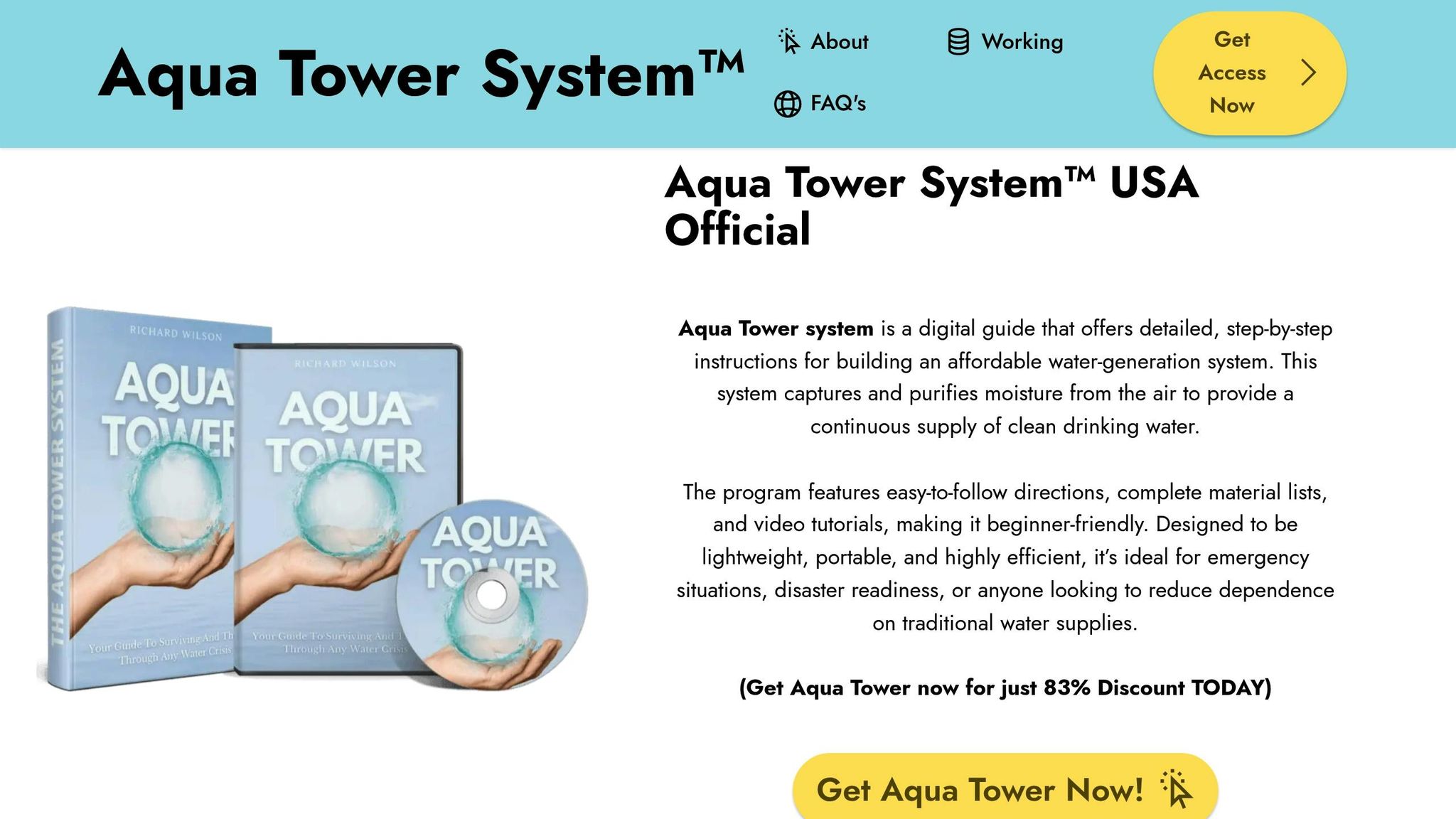
The Aqua Tower is a DIY water generator designed to function without electricity, ensuring you have a steady water supply during power outages. Dehydration doesn't just make you thirsty - it can intensify feelings of anxiety and irritability. Dr. Martin P. Paulus, President of the Laureate Institute for Brain Research, explains:
"Dehydration can worsen feelings of anxiety and irritability."
In extreme cases, dehydration can lead to confusion or even coma. The Aqua Tower is beginner-friendly and helps you secure at least a three-day water supply - one gallon per person per day - without relying on the grid. This consistent access to water not only keeps you hydrated but also helps your body regulate its temperature, reducing the risk of heat exhaustion.
While the Aqua Tower takes care of hydration, keeping your environment cool during a blackout requires an alternative power source.
Lost Generator: Powering Cooling Devices During Outages
The Lost Generator is a DIY thermal power system that provides energy for essential cooling devices when the grid is down. Sustained airflow is crucial for managing heat stress and improving sleep quality in high temperatures. Portable generators like this can also power critical medical devices, such as CPAP machines, and keep refrigerators running during prolonged outages.
Conclusion: Building Mental Strength During Extreme Heat
Heatwaves don’t just impact your physical health - they also put your mental resilience to the test. Research shows that extreme heat can elevate mental health risks, with a notable increase in hospital visits and even suicide rates during prolonged heatwaves.
To combat this, adopting a proactive approach is essential. Six key strategies - staying hydrated, practicing mindfulness, getting quality sleep, using cooling techniques, fostering social connections, and relying on off-grid tools - can help protect your mental well-being during these challenging times. Each step, from drinking enough water to finding creative ways to stay cool, plays a role in maintaining mental clarity when temperatures soar.
Kim Meidenbauer, Ph.D., Assistant Professor of Psychology at Washington State University, explains:
"In part, this is because when we are experiencing hot weather, our bodies must devote valuable energy to cooling themselves down, a process called thermoregulation. This disrupts our brain's typical functioning."
This insight highlights the importance of prioritizing strategies that support both your body and mind. By integrating these practical steps into your routine, you can help your brain stay sharp and resilient, even when the heat tries to wear you down.
FAQs
Dehydration during a heatwave can seriously impact how well your brain works. When your body loses too much water, you might experience confusion, trouble focusing, or even feel disoriented.
Why does this happen? Because water plays a key role in keeping your brain functioning as it should. Even slight dehydration can throw off your cognitive abilities. That’s why staying hydrated is so important - especially when you’re facing extreme heat. Keeping your water intake up helps your mind stay clear and focused, no matter how high the temperature climbs.
Extreme heat can ramp up stress levels, but practicing mindfulness can help you stay centered and composed. Here are a few easy techniques to manage heat-related stress:
- Deep breathing: Try a method like the 4-4-4-4 box breathing technique. Inhale for 4 seconds, hold for 4 seconds, exhale for 4 seconds, and pause for 4 seconds. This can help calm both your body and mind.
- Guided visualization: Close your eyes and imagine yourself in a cool, soothing place - maybe a breezy beach or a shady forest. This mental escape can shift your focus away from the heat.
- Progressive muscle relaxation: Slowly tense and then release each muscle group in your body, starting from your toes and working upward. This helps ease physical tension that heat can amplify.
These practices can help you stay grounded when temperatures soar. If you're looking for more tips on handling extreme conditions, AgentXSurvival offers helpful resources to build your resilience.
Keeping your home cool during a heatwave without air conditioning isn’t as hard as it might seem. A few smart strategies can make a big difference. First, block out the sun. Close your blinds or curtains during the day, and if possible, use reflective materials like window film to keep the heat outside. Once the sun sets and temperatures drop, open your windows and use fans to create cross-ventilation - this helps pull in the cooler night air while pushing out the trapped heat.
Another trick is evaporative cooling. Place a pan of ice in front of a fan to circulate chilled air, or hang a lightly misted cloth near a fan’s airflow for a similar effect. Reducing indoor heat sources also helps - turn off unnecessary lights and skip using the oven, which can make your home even hotter. If the heat is still overwhelming, head to cooler public spaces like libraries or community cooling centers during the peak heat hours. For more tips and tools to stay cool, check out resources from AgentXSurvival.